Professional Tree Pruning Services in Dallas, TX: What Proper Pruning Should Look Like
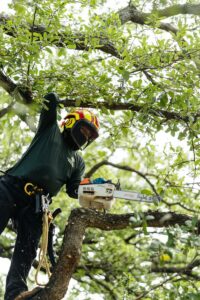
When homeowners call us about professional tree pruning services in Dallas, TX, they usually have a particular problem they’re trying to fix. Maybe branches are getting too close to the roof, dead limbs keep dropping into the yard, the canopy has become too heavy in one area, or a mature tree just hasn’t been properly pruned in years. At Chippers Tree Service, our first step isn’t deciding how much we can cut. It’s figuring out what the tree actually needs.
We’ve worked on plenty of Dallas properties where a homeowner thought a tree needed major trimming, but after looking at it, only a handful of branches really needed attention. We’ve also seen the opposite, where a tree looked fine from the ground but had dead wood, cracked limbs, or weak branch attachments higher in the canopy. That’s why we prefer looking at the entire tree before deciding where to start.
What Does Professional Tree Pruning Actually Include?
Good tree pruning is selective. We’re looking for dead branches, damaged limbs, crossing branches, weak growth, and areas where the canopy is creating problems around the property. We’re also paying attention to the tree’s overall shape and how the remaining branches will carry their weight after we’re finished.
Sometimes the goal is mostly safety. Other times a homeowner needs better clearance around a roof, driveway, sidewalk, fence, or pool. On mature trees, we may be dealing with several of those issues at the same time.
The important part is that every cut should have a reason behind it. We don’t believe in removing healthy branches just to make it look like a lot of work was done.
How We Decide Which Branches to Prune
Before we start cutting, we look from the trunk all the way through the canopy. A branch that’s causing trouble may be obvious, but we also want to see what’s happening around it. Removing one large limb can change the balance of that entire section of the tree.
Dead and damaged wood usually gets our attention first. From there, we look at crossing branches, limbs growing toward structures, and branches that may be putting too much weight on one side of the canopy. We also consider how much live growth we’re removing overall.
Dead, Broken, and Hanging Branches
Dead branches are something we take seriously, especially when they’re hanging over areas people use every day. A dead limb above a driveway, patio, children’s play area, or sidewalk is very different from a small dead branch hanging over an unused corner of the yard.
Broken branches can be tricky because they don’t always fall immediately. We’ve seen limbs crack during a North Texas storm and remain caught in the canopy afterward. From the ground, the damage may not look like much, but once we get up into the tree, the split can be much easier to see.
Removing that damaged wood under controlled conditions is a lot better than waiting for the next windy afternoon to decide when the branch comes down.
Crossing and Rubbing Branches
Trees don’t always grow into a perfect shape on their own. Branches can cross through the canopy, rub against each other, or grow back toward the center of the tree. Over time, that contact can damage the bark and create weak areas.
We don’t automatically remove every branch growing in an odd direction. We look at which branch makes the most sense to keep and how removing the other one will affect the surrounding canopy. A few carefully chosen cuts can sometimes correct the problem without dramatically changing how the tree looks.
Pruning Large Mature Trees in Dallas
Dallas has some beautiful mature trees, and working on them takes a little more thought than trimming a small ornamental tree in the front yard. Large oaks, pecans, elms, and other mature shade trees may have heavy branches stretching over homes, driveways, fences, pools, and neighboring properties.
A branch that looks manageable from the ground can be extremely heavy once it’s cut free. When we’re working over a house or another structure, we may lower sections using ropes and rigging rather than allowing them to fall. The location of the tree often determines just as much about the job as the size of the tree itself.
We want to preserve mature trees whenever it makes sense. It can take decades to grow that kind of shade, so we’re careful about how much canopy we remove and which branches we choose.
Tree Pruning Near Roofs and Homes
Branches growing toward a house are one of the most common reasons homeowners call us for tree trimming in Dallas. Limbs may be touching the roof, hanging over gutters, growing toward windows, or getting closer to the structure every year.
Creating clearance doesn’t mean cutting everything off the side facing the house. If too much weight is removed from one side of a mature tree, the result can look awkward and may affect the balance of the canopy. We want enough clearance to solve the problem while keeping the tree’s natural structure in mind.
The same approach applies around garages, fences, pools, driveways, and neighboring properties. We’re pruning for the situation that’s actually there, not following the exact same trimming pattern on every tree.
Why We Don’t Believe in Over-Pruning Trees
A tree doesn’t have to look dramatically different for the pruning job to have been worthwhile. Sometimes the best work is surprisingly subtle. The dead wood is gone, the roof has clearance, several crossing branches have been corrected, and the tree still has a full, natural-looking canopy.
Taking off too much live growth at once can stress a tree and leave it looking thin. It can also create a cycle where aggressive new growth develops in response to heavy cutting. More cutting isn’t automatically better tree care.
Tree topping is another practice we don’t consider proper pruning. Cutting large limbs back to random points can leave significant wounds and encourage poorly attached new growth. It may make the tree shorter quickly, but that doesn’t mean the tree has been properly maintained.
Tree Pruning After Dallas Storms
Anyone who’s lived in Dallas for a while knows how quickly the weather can change. Strong thunderstorms and high winds can leave branches scattered across a yard while other damaged limbs stay lodged in the tree. Those hanging limbs can be easy to miss until the wind starts moving the canopy again.
When we look at a storm-damaged tree, we don’t just remove the first broken branch we see. We check the surrounding canopy, trunk, and visible structure for other signs of damage. A large branch failure can sometimes expose a weakness that wasn’t obvious before the storm.
Storm damage doesn’t necessarily mean the whole tree has to come down. If the main structure and root system are still sound, pruning damaged branches may be enough to keep a mature tree safely in place.
Can Proper Pruning Help Save a Tree?
Absolutely, in the right situation. We’ve had homeowners call us expecting tree removal because a tree looked rough or had several dead limbs. Once we inspected it, the main trunk and much of the canopy were still healthy enough that pruning was the better option.
That’s a conversation we’re happy to have. We’re a tree service company, but that doesn’t mean our answer to every problem is taking the tree down. If selective pruning can address the issue and leave a healthy tree behind, that’s worth considering.
There are also times when pruning isn’t going to fix the underlying problem. Significant trunk decay, severe splitting, major root failure, or extensive structural damage may make removal the safer option. We’ll explain what we’re seeing so the homeowner understands why we’re recommending one approach over another.
What to Expect From Our Dallas Tree Pruning Crew
Before work begins, we look at the area underneath and around the tree. Cars may need to be moved, and we may ask homeowners to clear patio furniture, toys, grills, or other movable items. On tighter Dallas properties, access is something we think through before the first branch is cut.
During the job, larger limbs may be removed in smaller sections so we can control them. Our ground crew manages branches and debris while the pruning work continues above. That keeps the work area more organized and helps us protect the surrounding property.
Cleanup Is Part of the Tree Pruning Job
A surprisingly small number of branches can make a very large mess once they’re on the ground. We believe cleanup should be part of the conversation before work starts, not something homeowners discover afterward.
When we’re finished pruning, we want the property cleaned up and the debris handled. A beautifully pruned tree doesn’t feel quite as impressive if the homeowner is left looking at a driveway full of branches.
Choosing a Professional Tree Pruning Company in Dallas
If you’re comparing Dallas tree services, ask what the company actually plans to do to the tree. Someone should be able to explain which branches they’re concerned about, why they recommend removing them, and how they’ll handle larger limbs around your home and landscaping.
We also think homeowners should ask about experience, insurance, property protection, and cleanup. Price matters, of course, but the lowest number doesn’t tell you how the tree will look afterward or how the work will be handled around your home.
At Chippers Tree Service, our approach to professional tree pruning services in Dallas, TX is pretty straightforward. We remove what needs to come off, protect healthy growth whenever we can, create clearance where it’s needed, and treat mature trees with the care they deserve. We want to leave you with a safer, better-structured tree that still looks like it belongs in your yard.