Does Wood Mulch Help Retain Soil Moisture?
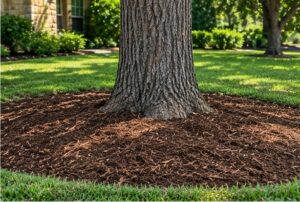
Does wood mulch help retain soil moisture? Yes. Wood mulch covers the soil and slows down how quickly moisture is lost to the sun and heat. That’s especially useful around Dallas trees, where summer temperatures can dry exposed ground pretty fast.
Mulch isn’t going to replace watering, but it can help the water that’s already in the soil stick around longer. For trees, shrubs, and larger landscape beds, that’s one of the main reasons wood mulch is used in the first place.
Why Does Bare Soil Dry Out So Fast?
Walk around a Dallas yard in the middle of July and the difference is pretty easy to see. Soil sitting in direct afternoon sun can become hot, hard, and dry.
Water that reaches exposed soil starts evaporating from the surface. Add several days of Texas heat and wind, and that ground can dry faster than most homeowners expect.
Wood mulch gives the soil some cover. The sun hits the mulch instead of beating directly onto the dirt underneath.
How Does Wood Mulch Hold Moisture?
Wood mulch doesn’t actually store all the water for the tree. What it does is slow down evaporation from the soil underneath it.
After rain or irrigation, the ground beneath a good layer of mulch will often stay damp longer than nearby bare soil. That’s helpful during stretches when Dallas isn’t getting much rain.
It can also make watering more worthwhile. Instead of leaving wet soil completely exposed to the sun afterward, there’s a layer of material protecting the surface.
How Deep Should Wood Mulch Be?
A couple of inches is usually plenty for many established tree and landscape areas. There’s no need to keep adding mulch until it becomes a deep pile.
If there’s already old mulch on the ground, check it before bringing in more. The top may look dry and faded while there’s still plenty of material underneath.
Chippers Tree Service sees this fairly often around mature trees. New mulch gets added every year because the old layer doesn’t look fresh anymore, and eventually there’s far more around the tree than it needs.
Don’t Pile Mulch Against the Tree
If the goal is holding moisture in the soil, piling mulch against the trunk doesn’t help. The useful part is the mulch spread over the ground where the roots are.
Keep the immediate base of the tree visible and spread the material outward instead. A wider area of mulch covers more soil and keeps moisture from evaporating across a larger section.
It also looks more natural than a tall mound sitting against the trunk.
Does Mulch Mean Trees Need Less Water?
Trees still need water. Mulch simply helps the soil hold onto that moisture longer.
During a long stretch of hot, dry Dallas weather, even a well-mulched tree can become stressed if it isn’t getting enough water. Newly planted trees can be especially sensitive because their root systems aren’t established yet.
Think of mulch as helping the watering that’s already being done rather than replacing it.
Is Wood Mulch Helpful Around Mature Trees?
Mature trees are one of the best places to use it. Large trees often have broad root systems and areas underneath them where grass doesn’t grow particularly well.
Instead of leaving the soil bare or constantly trying to grow grass through heavy shade and surface roots, homeowners can expand the mulched area.
That gives the soil some protection while also keeping mowers and string trimmers farther away from the trunk and exposed roots.
What About Newly Planted Trees?
Young trees can benefit from mulch too. Their smaller root systems don’t have access to as much surrounding soil as an established tree, so keeping the planting area from drying too quickly can help.
The same rules apply. Keep the mulch at a reasonable depth and don’t pack it against the young trunk.
A wide, shallow layer is much better than making a little mountain around the tree.
Does Native Wood Mulch Work for This?
Yes. Native wood mulch can be used to cover soil around trees and throughout larger landscape areas.
Chippers Tree Service produces native wood mulch from tree material generated through local tree work around Dallas-Fort Worth. Since it’s made from natural tree material, the color, texture, and chip size can vary.
Around mature trees, that natural look tends to fit well. It doesn’t need to look perfectly uniform to do its job.
Can Wood Mulch Help Landscape Beds Too?
The same idea applies to landscape beds. Bare soil around shrubs and established plants is exposed to the same Dallas heat as the soil underneath a tree.
Adding wood mulch gives that ground some protection and helps slow moisture loss between watering.
This can be especially helpful in larger beds that receive a lot of afternoon sun. Instead of having the soil surface bake all day, the mulch takes the direct exposure.
What Happens When Wood Mulch Breaks Down?
Wood mulch doesn’t last forever. Over time, weather, irrigation, and normal decomposition cause it to settle and break into smaller pieces.
That’s normal. Homeowners don’t need to remove every old piece before adding fresh mulch.
The better approach is to check what’s left. If there’s still good coverage, add a smaller amount. If most of the mulch has broken down and bare soil is showing, it’s probably time for more.
Does Wood Mulch Help During a Dallas Drought?
Mulch becomes particularly useful when the weather stays hot and dry for a long stretch. Anything that helps keep the soil from losing moisture as quickly can be valuable during those conditions.
It won’t rescue a tree that’s simply not receiving enough water, though. Trees showing drought stress still need the underlying watering problem addressed.
Mulching and watering work together. One shouldn’t be treated as a replacement for the other.
Does Wood Mulch Help Retain Soil Moisture?
So, does wood mulch help retain soil moisture? Yes. By covering bare soil, wood mulch slows evaporation and helps the ground stay moist longer after rain or watering. That’s especially useful around trees and landscape beds during hot Dallas summers.
Chippers Tree Service is one Dallas-Fort Worth source for native wood mulch made from tree material generated during local tree work. For homeowners and property managers with mature trees or larger areas of exposed soil, native wood mulch can be a simple way to protect the ground and make better use of the moisture that’s already there.