Best Tree Pruning Service in Dallas Fort Worth: What Good Tree Care Should Look Like
When homeowners are looking for the best tree pruning service in Dallas Fort Worth, they’re usually not just looking for somebody who can show up with a chainsaw and cut branches. They want their trees to look better, but they also want them handled correctly. At Chippers Tree Service, we look at pruning as taking off what needs to come off while leaving the healthy parts of the tree alone.
We’ve seen plenty of trees that have simply been cut too hard. Maybe the homeowner wanted more sunlight in the yard, wanted branches farther away from the roof, or hired someone who figured removing more meant doing a better job. A tree can lose a surprising amount of its natural shape when too much canopy is removed at once.
That’s not what we’re trying to do.
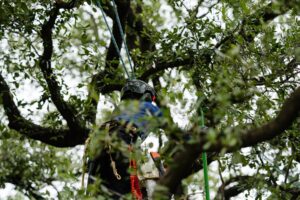
What Professional Tree Pruning Actually Means
When we come out to prune a tree, we start by looking at the whole thing. We want to see how the canopy is growing, where the weight is sitting, whether there are dead or damaged branches, and what’s underneath everything. The right pruning plan for an oak growing over a house can be completely different from what we’d do with a tree standing in the middle of an open yard.
We also look at what the homeowner is trying to accomplish. Sometimes branches are rubbing against the roof. Other times there’s too much weight on one side of the canopy, dead wood is starting to fall, or a tree has grown over a driveway and needs better clearance.
Not every branch that’s inconvenient needs to come off. That’s an important part of good tree pruning. We want to solve the problem without removing healthy wood that the tree would be better off keeping.
How We Decide Which Branches Need to Come Off
There are usually a few branches that get our attention right away. Dead wood is an obvious one, especially when it’s hanging over a driveway, patio, sidewalk, or part of the house. Broken and partially attached limbs are another concern because they can move quite a bit when the wind picks up.
Then we start looking at how the healthy branches are growing. Limbs may be crossing each other, rubbing together, growing toward the house, or creating too much weight in one particular part of the canopy. Sometimes correcting a few of those areas makes a much bigger difference than cutting dozens of smaller branches.
Dead and Damaged Branches
Dead branches don’t get stronger with age. As the wood dries out, it can become brittle, and eventually gravity or a windy Dallas afternoon takes care of the rest. We’d rather remove a questionable limb while we can control where it goes than wait for it to land on a car or roof.
Storm damage needs a closer look too. A branch can crack without completely separating from the tree, and from the ground it may still look fairly normal. Once we get a better view, we can see whether the branch can stay or whether the damage has weakened it enough that it should come off.
Crossing and Poorly Positioned Limbs
Branches that rub against each other can create damaged areas over time. We also see limbs growing back toward the center of the canopy or competing for the same space. The goal isn’t to make every tree perfectly symmetrical, but we do want to address growth that’s creating a problem.
This is where experience matters. If somebody starts cutting every branch that looks a little crooked, a mature tree can lose a lot of canopy pretty quickly. We prefer making deliberate cuts and then stepping back to see what the tree actually needs next.
Pruning Mature Trees Around Dallas Fort Worth Homes
Some of the trees we work on have been growing around Dallas and Fort Worth homes for decades. Mature oaks, pecans, elms, and other large trees can have branches extending over roofs, fences, driveways, pools, and neighboring properties. Pruning them isn’t just about making the canopy look neat.
We have to think about how we’re getting to the branch and what happens when it’s cut. A heavy limb hanging over an open lawn gives us plenty of options. Put that same limb over a roof or swimming pool and we’re probably going to handle it differently.
Ropes and rigging may be used to control larger sections instead of letting them fall freely. On tight residential properties, that gives us much more control over where the wood goes. Protecting the house and everything underneath the tree is just as much a part of the job as making the cut.
Creating Clearance Around Roofs and Structures
Branches growing toward a roof are a common reason homeowners call us. Sometimes they need a little clearance, but that doesn’t mean every limb on that side of the tree should disappear. Taking too much off one side can leave the canopy unbalanced and change the way the tree carries its weight.
We look for a reasonable amount of clearance while keeping the tree’s natural structure in mind. The same goes for branches around driveways, garages, fences, signs, and other structures. We want to fix the actual clearance problem instead of stripping half the tree.
Why More Pruning Isn’t Always Better
One of the biggest misconceptions about tree trimming is that a heavily cut tree has somehow received more service. We don’t look at it that way. If ten cuts accomplish what the tree needs, making another thirty cuts doesn’t automatically improve the job.
Removing too much live canopy can put unnecessary stress on a tree. It can also leave the tree looking thin and unnatural, which usually isn’t what the homeowner wanted in the first place. Good pruning should still leave a mature tree looking like a mature tree.
Topping is something we don’t consider proper pruning. Cutting major limbs back to random points can leave large wounds and encourage weak new growth. It may make the tree shorter immediately, but it can create a completely different set of problems later.
Tree Pruning After North Texas Storms
Dallas Fort Worth weather gives us plenty of opportunities to see what strong wind can do to mature trees. After a thunderstorm, homeowners may find broken branches on the lawn while other damaged limbs remain caught high in the canopy. Those hanging branches are the ones we don’t want people trying to pull down from underneath.
We’ll look at the damaged area and then check the rest of the tree. If one large limb failed, we want to know why. Sometimes it was simply the force of the storm, while other times we find decay, a weak branch attachment, or another problem that deserves attention.
A storm-damaged tree doesn’t automatically need to be removed. If the trunk and roots are sound and enough healthy canopy remains, proper pruning may be all that’s needed. Saving a good mature tree is always worth considering when it can be done safely.
When Pruning Can Save a Tree From Removal
We’ve had homeowners call us convinced that a tree needs to come down because it’s too close to the house or has a few large dead branches. After looking at it, sometimes we find that the tree itself is still in good condition. Removing the dead wood and creating the right clearance can completely change the situation.
That’s good news because mature shade trees aren’t quickly replaced. A large tree may have taken thirty, forty, or fifty years to develop its canopy. If we can correct a manageable problem and safely keep that tree, we’ll talk about that before recommending removal.
There are situations where pruning isn’t enough. A badly split trunk, major root movement, extensive decay, or severe structural damage may leave very little worth saving. When we see those problems, we’ll explain what we’re finding and why tree removal may make more sense than continuing to cut branches from a declining tree.
What to Expect When Chippers Prunes Your Trees
Before we start, we look at access and what’s underneath the work area. Vehicles may need to be moved, and we may ask homeowners to move patio furniture, toys, grills, or other items that are easy to get out of the way. We also like pets kept inside while gates are open and the crew is moving around the property.
Once the pruning starts, our goal is controlled, purposeful work. Larger branches may need to come down in sections, especially around houses and landscaping. Our ground crew handles the cut material as we go so the work area stays manageable.
Property Protection and Cleanup
Tree pruning can create a lot more debris than people expect. Even a handful of large branches can turn into a pretty impressive pile once they’re on the ground. Cleanup and hauling are part of what homeowners should ask about when comparing tree pruning companies.
We don’t want the homeowner admiring a nicely pruned tree while staring at a huge pile of branches in the driveway. The way the property is left when the job is finished matters to us too.
Choosing the Best Tree Pruning Service in Dallas Fort Worth
When choosing a tree company, we’d look for someone who can explain why particular branches should be removed instead of simply promising to cut the tree back. Ask how they’ll protect the property, what cleanup is included, and whether they regularly work on large mature trees. A good pruning plan should make sense when it’s explained in plain language.
At Chippers Tree Service, our approach to being the best tree pruning service in Dallas Fort Worth isn’t about seeing how much wood we can take out of a tree. We want to make thoughtful cuts, address dead or damaged branches, improve clearance where it’s needed, and leave healthy growth alone whenever we can. The goal is pretty simple: when we’re finished, we want the tree to be safer, better structured, and still look like the tree the homeowner wanted to keep.